Things to Do in Belgium
Beer worth crossing oceans for, fries that outshine Paris, and tiny towns that rewrite medieval time
Top Things to Do in Belgium
Find activities and tours you'll actually want to do. Book through our partners -- no booking fees.


Plan Your Trip
Essential guides for timing and budgeting
Climate Guide
Best times to visit based on weather and events
View guide →Day Trips
The best excursions and nearby destinations worth the journey
Explore day trips →Where to Stay
Best neighbourhoods, hotel picks, and booking tips
Find hotels →Travel Insurance
What's required, what coverage matters, and how to get a quote
Read guide →What to Pack
Climate-specific gear, essentials, and what to leave at home
See packing list →When Should You Visit Belgium?
Tap a month for weather, crowds, and highlights
View full year-round climate guide →


Your Guide to Belgium
About Belgium
The first thing you notice in Belgium isn't the Grand Place or the Atomium. It's the smell of hops and malt drifting from a corner café in Brussels' Marolles district at 9 AM. This is a country where beer runs budget-friendly. The fries at Maison Antoine on Place Jourdan come wrapped in paper cones with fifteen sauce options.
You can bike from one UNESCO World Heritage site to another in under an hour. In Ghent's Patershol neighborhood, university students crowd 12th-century cellars turned bars. Down in Bruges' Sint-Anna district, the medieval streets smell of caramelized sugar from the two waffle stands that have been rivals since year locals still reference.
Belgian Rail's yellow-and-white carriages run like Swiss clockwork from Antwerp's diamond district to the Ardennes forests. They'll cost you a mid-range fare each way. The catch: it rains 200 days a year. When it does, those cobblestones turn into ice rinks. Duck into a brown café in Leuven's Oude Markt, forty bars in one square.
Discover why locals drink beer like the French drink wine. Belgium doesn't try to impress you. It just happens to be where chocolate, beer, and medieval architecture reached their logical conclusions.
Antwerp asks its own set of questions, whether to stay on the Right Bank or cross through the Sint-Annatunnel for the skyline from the Left Bank, whether the Rubens House or the reopened KMSKA gets the afternoon, how much a day trip from Brussels captures, and TTDI's Antwerp dossier works through them at a scale this country page leaves to the city.
Brussels splits into an upper and lower town connected by a steep hill, and that split shapes everything, whether to base yourself near the Grand Place or up by the Royal Palace, how early the weekend flea market at Place du Jeu de Balle thins out, which Art Nouveau facades in Ixelles justify the detour, so TTDI's Brussels city playbook sorts through those neighborhood-level calls that a country page can only point toward.
Travel Tips
Transportation: Belgian Rail's app is your lifeline. Download it before landing. Trains from Brussels Airport to Central run every 20 minutes. They cost less than a taxi into the city center. The real hack is the day pass that covers all national trains at a budget-friendly rate. This proves useful when day-tripping between Bruges, Ghent, and Antwerp. In cities, skip the single tram tickets. Grab an MOBIB card for cheaper rides, think of it as Belgium's version of London's Oyster card. Antwerp's premetro system is faster than taxis during rush hour. Weekend trains after midnight? Forget it. Last ones leave around 12:30 AM, so plan your beer crawl accordingly.
Money: Belgium runs on cards. Contactless works everywhere, even at market stalls. Keep some cash for frites stands and small-town cafés where card machines mysteriously stop working. ATMs charge fees per withdrawal. Grab cash at the airport where fees are capped lower than city machines. Tipping isn't expected. Rounding up a small amount is appreciated, at brown cafés where you've been nursing the same Westmalle for three hours. Hotel prices jump significantly during Tomorrowland in late July. They drop substantially in November when the Christmas markets aren't quite set up yet.
Cultural Respect: Language changes every 30 kilometers. Dutch in Flanders, French in Wallonia, German in the east. Start with 'Dag' in Bruges, 'Bonjour' in Liège. Belgians will switch to English immediately. The effort counts and often gets you better recommendations. Don't photograph people in markets without asking. This matters in Antwerp's diamond district where privacy is paramount. Sunday mornings are sacred. Most shops stay closed until noon, so stock up on Saturday night if you're craving fries after last call. When ordering beer, remember that each style has its own glass. Asking for a generic 'beer' will get you the house lager instead of the Trappist you wanted.
Food Safety: Street food in Belgium is safer than most restaurants. Those frites are flash-fried twice at high temperatures. Look for stands with queues at lunch. Skip empty ones. Mayonnaise-based sauces sit out in summer heat. Request the fresh bottle from the cooler if you're worried. Belgian beer averages 8-12% ABV. Pace yourself like you're drinking wine, not lager. Water is surprisingly expensive at cafés. It's free from fountains in Grand Place and other squares. The locals drink tap water without hesitation. Those fountains are continuously fed by Belgium's pristine water system.
When to Visit
April through October is the sweet spot. Belgium makes you work for it. May brings 18-22°C (64-72°F) days and the Brussels Jazz Festival. It also brings sudden downpours that turn medieval streets into rivers. June-August peaks at 22-25°C (72-77°F) with beer festivals every weekend. Hotel prices spike significantly during Tomorrowland's last two weeks of July.
September might be perfect: 19°C (66°F), cheaper hotels, and harvest festivals in Wallonia's wine country. October drops to 14°C (57°F). The forests around the Ardennes explode into colors worth the train ticket. Winter hits hard. December averages 5°C (41°F) with biting wind. The Christmas markets in Bruges (November 25-January 8) make up for it.
Budget extra for glühwein and gingerbread. January-March is brutal: 3°C (37°F), constant drizzle, and a good portion of restaurants close for renovations. That's when you'll have Ghent's Gravensteen castle to yourself. Beer cafés feel like living rooms. Rain is the real season here. It falls 220 days a year, so learn to love it or stay home.
Frequently Asked Questions
What Are the Top Things to Do in Brussels and Beyond in Belgium?
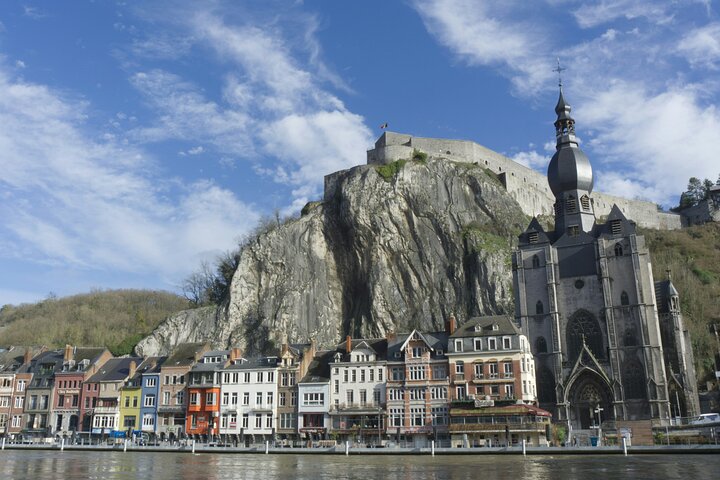
Brussels anchors most itineraries with the Grand-Place, Atomium, and Manneken Pis. But the country's real depth develops elsewhere. Head to Bruges for canal-side medieval architecture, Ghent for the Gravensteen castle and lively Graslei waterfront, or Antwerp for Rubens' house and the fashion district. In the Ardennes, Dinant and Durbuy offer kayaking on the Meuse River and hiking trails through forested valleys, rewarding from May to September.
What Are the 10 Best Experiences to Prioritize in Belgium?
Start with the Grand-Place in Brussels, Bruges' Belfry climb (366 steps), and a brewery tour at Westvleteren or Cantillon. Add Ghent's Gravensteen castle, Antwerp's Cathedral of Our Lady, the Battlefields of Ypres with the Menin Gate ceremony, and a waffle at Maison Dandoy or frites from Fritland. Round out the list with a visit to Dinant's clifftop citadel, the Ardennes caves at Han-sur-Lesse, and chocolatier shopping along Rue au Beurre in Brussels, most experiences cost €5, 15 for entry.
What Is Time Out Belgium, and Is It Useful for Trip Planning?
Time Out covers Brussels and other Belgian cities with curated lists of restaurants, bars, events, and weekend activities, much like its editions elsewhere. It's strong on Brussels' emerging neighborhoods, Dansaert for fashion boutiques, Saint-Géry for nightlife, and seasonal happenings like the Winter Wonders market in December. Pair it with local picks from Visit Flanders or Wallonia Belgium Tourism for broader geographic coverage.
What Are the Highlights of Belgium That Define the Country?
Belgium distills into three pillars: medieval Flemish towns (Bruges, Ghent, Mechelen), beer culture rooted in Trappist monasteries and lambic cellars, and Art Nouveau architecture concentrated in Brussels' Ixelles and Saint-Gilles districts. The Ardennes add a natural counterpoint with dense forests and riverside towns like La Roche-en-Ardenne. Most first-time visitors hit Brussels, Bruges, and Ghent in 4, 5 days, but a full week lets you fold in Antwerp and the WWI sites around Ypres.
What Are the Best Places to Visit in Northern Belgium?
Northern Belgium, Flanders, holds Bruges, Ghent, Antwerp, and Leuven within easy train reach of Brussels (20, 60 minutes, €8, 15). Bruges draws crowds for postcard canals, while Ghent offers similar architecture with fewer tourists and better nightlife along Vrijdagmarkt. Antwerp blends Rubens-era grandeur with a modern fashion scene, and Leuven's Oude Markt becomes one of Europe's longest bar terraces on warm evenings. The coast at Ostend and De Panne is popular with Belgians in summer but underwhelming compared to inland towns.
What Is the Connection Between Leuven and the Guardian?
Leuven occasionally appears in Guardian travel features for its lively university atmosphere, historic Stella Artois brewery (now the Leuven experience center), and the ornate Town Hall on Grote Markt. The city's compact medieval core and student energy make it a strong day trip from Brussels, just 25 minutes by train, if you're curious about Belgian beer beyond the tourist trappings. The Guardian has also covered its cycling culture and the M-Museum's Flemish masters collection.
What Are the Best Places to Visit Near Belgium?
Amsterdam sits 2 hours north by train (€29, 44), Paris 1.5 hours south on Thalys (€39, 99), and Luxembourg City 2.5 hours southeast (€20, 35). Cologne and Aachen in Germany are both under 2 hours from Brussels, with cheap regional train fares around €20, 30. Within Belgium, the Ardennes towns, Dinant, La Roche-en-Ardenne, Bouillon, feel worlds apart from the cities despite being only 90 minutes away by car or bus.
How Useful Is Tripadvisor for Planning a Belgium Trip?
TripAdvisor listings for Belgium skew heavily toward the big three, Brussels, Bruges, Antwerp, and tend to surface the same waffle shops and chocolate stores. It's reliable for hotel reviews and booking tours to the Battlefields or Ardennes, but you'll miss gems like Mechelen's carillon concerts or Ghent's Vooruit arts center if you rely on it exclusively. Cross-reference with Visit Flanders or local food blogs like Foodwalk Brussels for less obvious picks.
Is There an Official Tourism Map of Belgium, and Where Can I Get One?
Visit Flanders and Wallonia Belgium Tourism both publish free regional maps downloadable as PDFs or available at tourist offices in major train stations (Brussels-Central, Bruges, Ghent). The national rail site SNCB has a combined transport and attractions map that's handy for planning train-based itineraries. Paper maps are still stocked at most hotel lobbies, though Google Maps covers cycling routes and walking paths reliably once you're on the ground.
What Is Belgium Like in Winter, and Is It Worth Visiting?
Winter in Belgium runs cold and damp, daytime highs around 3, 7°C from December to February. But Christmas markets transform Brussels, Bruges, and Ghent into atmospheric draws. Brussels' Winter Wonders runs late November to early January with an ice rink and light show on the Grand-Place; Bruges' market centers on the Markt square with mulled wine and local crafts. The Ardennes see occasional snow, making it Belgium's only real winter-sports region, though facilities are modest compared to the Alps.
What Are Some Unknown or Off-the-beaten-path Places in Belgium?
Mechelen, halfway between Brussels and Antwerp, holds a 97-bell carillon in St. Rumbold's Cathedral and a moving WWII transit camp memorial at Kazerne Dossin. Durbuy bills itself as the world's smallest city and anchors kayaking trips on the Ourthe River. Tongeren, Belgium's oldest town, hosts a large antiques market every Sunday, and the Hoge Kempen National Park near the Dutch border offers rare heathland hiking. Most of these see far fewer tourists than Bruges or Ghent but require a car or regional bus to reach efficiently.
What Forests Are Worth Visiting in Belgium?
The Ardennes hold Belgium's densest forests, Forêt de Soignes near Brussels is the most accessible, with beech groves and paved cycling paths starting from Tervuren. Further south, the Semois Valley around Bouillon and the forests near Han-sur-Lesse offer hiking trails ranging from easy riverside walks to steep ridge climbs. Hoge Kempen National Park in Limburg is Belgium's only national park, with heathland and pine forest best explored on marked bike routes. Autumn (October) brings peak colors; spring (April, May) sees wildflowers and fewer crowds.
What Is the Vampire Bar in Brussels?
Café Le Cercueil (The Coffin) in the Îlot Sacré district near the Grand-Place leans into Gothic kitsch with coffin-shaped tables, skulls, and dim red lighting. It's been a Brussels fixture since the 1980s, serving standard Belgian beers (Duvel, Chimay) in a theatrical setting that appeals to tourists more than locals. Expect €4, 6 beers and a crowd that skews younger and rowdier after 10 p.m. A short walk away, Delirium Café offers 2,000+ beers in a less gimmicky but still lively atmosphere.
What Are the Must-eat Foods in Belgium?
Start with frites from a proper frituur, Fritland near Bourse in Brussels or Fritkot Max in Antwerp, served with mayonnaise or andalouse sauce (€3, 5). Moules-frites (mussels and fries) peak from September to April when mussels are freshest; Chez Léon in Brussels is touristy but reliable. Belgian waffles split into two types: Brussels waffles (light, rectangular) and Liège waffles (dense, sweet, caramelized). Add carbonnade flamande (beer-braised beef stew), speculoos cookies, and pralines from Neuhaus or Pierre Marcolini to round out the essentials.
How Much Does a Typical Day of Sightseeing in Belgium Cost?
Budget €50, 80 per day for a comfortable experience: €10, 15 for museum entries (Groeningemuseum in Bruges, MHKA in Antwerp), €8, 12 for lunch (sandwich or frituur), €15, 25 for dinner at a mid-range brasserie, and €5, 10 for beers or coffee. Add €10, 20 for train tickets between cities and another €10 if you're visiting multiple attractions. Brussels and Antwerp skew 10, 15% pricier than Bruges or Ghent, and the Ardennes are cheaper still once you're outside resort towns like Spa.
Is Belgium Safe for Solo Travelers, Especially at Night?
Belgium is broadly safe, with violent crime rare in tourist areas. Brussels sees more petty theft, pickpocketing around Gare du Midi and the Grand-Place, so keep valuables secure on public transport. The Matongé and Gare du Nord neighborhoods feel rougher after dark. Stick to well-lit streets in Ixelles, Saint-Géry, or the city center. Bruges, Ghent, and Antwerp are walkable and calm even late at night, though bike theft is common everywhere, always lock up properly.
What's the Best Way to Get Around Belgium Without a Car?
Trains connect every major city in under 90 minutes, Brussels to Bruges is 1 hour (€15), Brussels to Ghent 35 minutes (€9), Brussels to Antwerp 45 minutes (€8). SNCB runs frequent service from 5:30 a.m. to midnight, and a Go Pass 10 (10 trips anywhere in Belgium for €59, under-26 only) is the best deal for multi-city travel. Buses fill gaps in the Ardennes, where towns like Durbuy and Dinant are harder to reach by rail. Cycling works well in flat Flanders. Hilly Wallonia is tougher but manageable with e-bikes.
When Is the Best Time to Visit Belgium to Avoid Crowds?
Late April to early June and September to mid-October offer mild weather (12, 20°C), fewer tourists than July, August, and open attractions without the Christmas market crush. Bruges sees its worst crowds from June to August and during the December market. Visit midweek in shoulder season for the canals without the queues. Brussels and Ghent handle summer crowds better due to their size. But Antwerp in September, during fashion week, buzzes with energy and manageable visitor numbers.
More Ways to Experience Belgium
Tours, day trips, and local experiences curated by on-the-ground operators.
Didn't see anything interesting yet?
Browse Viator's full catalog of tours, day trips, food experiences, and private guides in Belgium.
See All Belgium Tours on Viator